When the Sofa Became the Living Room’s Centre
When did the sofa become the living room’s centre? Trace its gradual shift from formal seating to a shared domestic focal point, and read the clues it leaves.
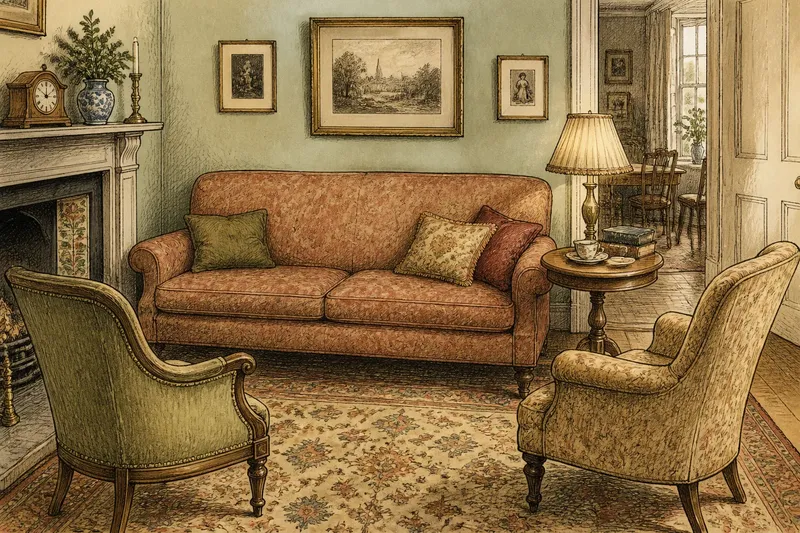
When did the sofa become the living room’s centre? The sofa’s rise was gradual, and its timing varied by place, household and room. In Britain, a useful point of reference is the nineteenth-century home, where the parlour and the more informal sitting room could serve different purposes; later, the living room increasingly brought everyday leisure into a shared space.
What did sofas do before the living room took shape?
Long upholstered seats existed before the modern living room, but they did not always dominate a domestic interior. In a formal reception room, a sofa might sit among individual chairs and other carefully chosen furnishings. Its appearance could signal comfort or refinement, while the room’s arrangement still gave equal attention to visitors, display and conversation.
Domestic rooms were not arranged in one uniform way. A parlour might be reserved for receiving guests, while another room accommodated daily family life; the distinction depended on household means, local custom and the home itself. Treat this as a broad pattern rather than a rule for every home or period.
The important change was not simply that sofas became softer. A long seat could accommodate several people and support conversation or rest, making it useful as households devoted more room to shared leisure. The sofa’s role followed those changing habits rather than a single invention or date.
When did the sofa become a living-room focal point?
There is no single year when the sofa became the living room’s centre. The shift took place over a long period: the nineteenth-century parlour and sitting room offer an earlier context, while the twentieth-century living room increasingly combined visiting, relaxation and family activities in one shared setting. The sequence differed across regions and households, so these periods are landmarks, not a universal timeline.
As rooms gathered more everyday activities, a sofa became a practical way to provide shared seating. It could face chairs for conversation, a fireplace for warmth, or later household equipment used for communal viewing. The object’s centrality came from its place in the room’s routines as well as its physical position.
That distinction matters. A sofa pushed against a wall may still be the seat everyone uses, while a striking sofa in a rarely entered parlour may function mainly as part of the room’s display. Furniture history is easiest to read when arrangement and use are considered together.
Why did the sofa suit shared domestic leisure?
A sofa accommodates more than one person without requiring a matching row of chairs. It can support conversation, reading and resting, so it suits a room whose purpose changes through the day. Its shape also makes it easy to recognise as a gathering place, even when other furnishings share attention.
Upholstery and construction influenced how inviting a sofa felt, but their availability and form varied. Fabric, padding, frame and finish all affected the experience and appearance; they did not transform every home at the same time. Avoid imagining a straight progression from stiff, formal furniture to uniformly relaxed modern seating: older and newer approaches have continued to coexist.
Popular images of families gathered on sofas have reinforced the association between the sofa and home life. Such images are part of the story, not proof that every household used its rooms in the same way. A sofa’s social meaning comes from the habits of the people who live with it.
How can you tell what role a sofa has in a room?
Look at what the sofa faces, what sits within reach and how its condition relates to the rest of the room. These clues can suggest whether it supports conversation, reading, shared viewing or occasional display, but none settles the question alone. A household may use one sofa for several routines.
- Observe the other seats: If chairs face the sofa, then conversation may be a priority; if they face elsewhere, consider whether the room is organised around another activity.
- Check the nearest surface: If a side table holds a lamp, book or cup, then the sofa may support lingering; if no surface is close, consider whether the arrangement is more formal or simply needs adjusting.
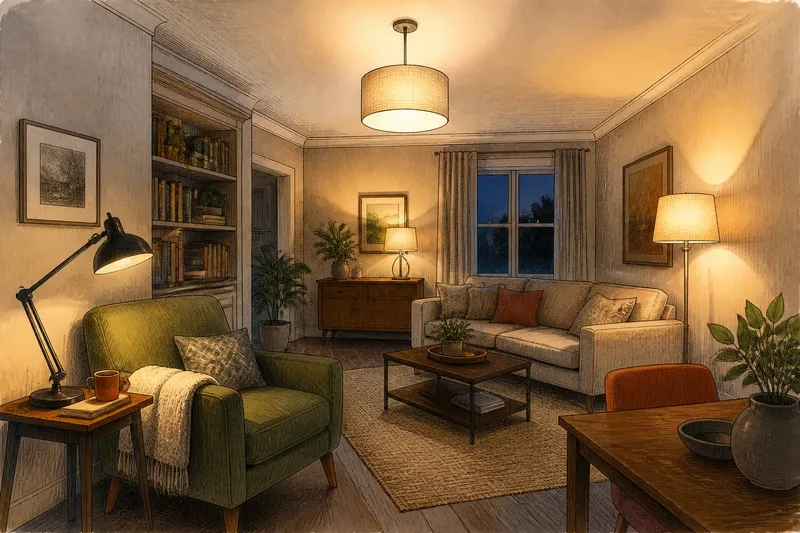
- Notice the light: If a floor lamp or reading light sits beside the sofa, then reading may be part of its use; if the area is dim, look for another activity that better explains its placement.
- Read the wear cautiously: If cushions show frequent use, then the sofa may be an everyday seat; if they appear little used, consider display, recent purchase or careful upkeep as alternatives.
- Compare the fabric with the room: If the upholstery is visually prominent, then the sofa may serve as a design focal point; if it blends into the palette, another furnishing may carry more of the visual emphasis.
- Check the route through the room: If people can pass without squeezing around the sofa, then its position may support the room’s routines; if the route is blocked, consider whether the sofa is placed for appearance rather than convenient use.
Say you are reading an invented sitting room with a sofa against the wall, two chairs turned towards it, a table with a lamp beside one arm and a clear path to the doorway. First, note that the chairs and table support conversation and reading; next, check whether the sofa’s cushions show signs of regular use. If they do, the most likely reading is an everyday gathering seat that also anchors the arrangement. If they do not, the layout still suggests that intention, but the sofa may be used less often or kept in careful condition; the clues do not establish which explanation is true.
What questions do readers ask about the sofa’s history?
Was the sofa always the main seat in the living room?
No. Its prominence depended on the room, household and period, and it shared space with chairs, benches and other seats. The living room’s growing role as a place for shared leisure helped make the sofa a more familiar focal point.
Did the sofa become central at the same time everywhere?
No single date applies across different countries, regions or households. The nineteenth-century parlour and sitting room and the later shared living room are useful reference points, not a universal sequence.
Does a sofa need to sit in the middle of a room to be its centre?
No. It can anchor the room through repeated use or visual prominence while standing against a wall. Its relationship to people and nearby furnishings matters as much as its exact position.
Can an old sofa reveal how a room was used?
Its upholstery, wear and position may offer clues, but they cannot provide a complete account by themselves. A sofa might be inherited, moved from another room or maintained for reasons unrelated to its original purpose.
What does the sofa’s changing role tell us?
The history of the sofa is a story of changing rooms as much as changing furniture. The nineteenth-century parlour and sitting room offer context for its earlier domestic roles; the later living room made shared leisure more visible in a single space. The timing was uneven, and the object never displaced every other seat or focal point.
To read a sofa in your own home, compare its intended role with what people actually do around it. If its position encourages conversation but everyone turns towards a window or bookcase, that difference may point to a more useful arrangement. The living room’s centre is not fixed by convention: its clearest clue is the activity the furniture makes comfortable and easy to repeat.